Market characteristics, trading and biosecurity practices of some selected border rural live-birds markets in Ghana: implication for avian transboundary disease dissemination
Fiona Nana Yaa Mensah, Benjamin Obukowho Emikpe, Raphael Deladem Folitse, Theophilus Odoom, Albert Agyapong Tweneboah, Edmond Onidje, Derrick Adu Asare, Kofi Sarpong, Emmanuel Donkor, Dennis Nkansah Ampadu
Corresponding author: Benjamin Obukowho Emikpe, School of Veterinary Medicine, Kwame Nkrumah University of Science and Technology, Kumasi, Ghana 
Received: 02 Sep 2024 - Accepted: 03 Jan 2026 - Published: 16 Apr 2026
Domain: Environmental health,Hygiene and sanitation,Veterinary medicine
Keywords: Cross-border trade, rural poultry, Ghana
Funding: This work received no specific grant from any funding agency in the public, commercial, or not-for-profit sectors.
©Fiona Nana Yaa Mensah et al. PAMJ-One Health (ISSN: 2707-2800). This is an Open Access article distributed under the terms of the Creative Commons Attribution International 4.0 License (https://creativecommons.org/licenses/by/4.0/), which permits unrestricted use, distribution, and reproduction in any medium, provided the original work is properly cited.
Cite this article: Fiona Nana Yaa Mensah et al. Market characteristics, trading and biosecurity practices of some selected border rural live-birds markets in Ghana: implication for avian transboundary disease dissemination. PAMJ-One Health. 2026;19:13. [doi: 10.11604/pamj-oh.2026.19.13.45221]
Available online at: https://www.one-health.panafrican-med-journal.com/content/article/19/13/full
Research 

Market characteristics, trading and biosecurity practices of some selected border rural live-birds markets in Ghana: implication for avian transboundary disease dissemination
Market characteristics, trading and biosecurity practices of some selected border rural live-birds markets in Ghana: implication for avian transboundary disease dissemination
Fiona Nana Yaa Mensah1,  Benjamin Obukowho Emikpe2,&, Raphael Deladem Folitse2, Theophilus Odoom3, Albert Agyapong Tweneboah4, Edmond Onidje1, Derrick Adu Asare2, Kofi Sarpong1, Emmanuel Donkor5, Dennis Nkansah Ampadu6
&Corresponding author
Introduction: rural poultry production is pivotal to food security, livelihood and sociocultural lifestyles of many rural households. However, cross-border trade of live poultry and poultry products at Live Bird Markets (LBMs) has been implicated in the introduction of infectious diseases such as Newcastle Disease (ND) and Avian influenza. This study investigated the role of market characteristics, trading and biosecurity practices of some selected border rural live-birds markets in Ghana on dissemination of avian transboundary diseases.
Methods: a cross-sectional semi-quantitative study was conducted using semi-structured questionnaire and observations. The study included a total of 180 rural poultry traders. Questionnaire assessed the demographic information, sources of birds, volume of poultry trades, means of transportation of birds, and handling and biosecurity practices of rural poultry traders in the markets.
Results: the study revealed that, all (100%) traders in Northern Ghana were male, while (73.7%) of traders in Southern Ghana were female. In Northern Ghana, 44.0% of traders purchased birds from less than 5 identified sources including Burkina Faso. Conversely, in Southern Ghana, 67.5% of traders purchased birds from more than 5 identified sources including Togo. Trading activities involved movement from one market to another on a designated market day; every two to four days by 48.0% and 48.7% of traders respectively in Northern Ghana and Southern Ghana. The most common mode of transportation of birds in both locations is motorcycle/tricycle (89.0%) Northern Ghana and (35%) Southern Ghana. The overall biosecurity practices were poor in both locations, (64.0%) Northern Ghana and (58.7%) Southern Ghana and traders have not attended any training or workshop on biosecurity.
Conclusion: the study suggests that the rural poultry trading practices has significant influence on the risk of infectious diseases in local poultry across the border areas. Hence, improved biosecurity, strengthened transboundary disease surveillance and other multidisciplinary approaches is needed in live bird markets at the border towns.

Rural poultry production is one of the major agricultural activities of most rural communities in Ghana. It plays a pivotal role in food security and livelihood of many rural households [1]. It is also integral to the sociocultural lifestyles of the people as they are reared for various purposes, including festivals, courtship and dowry, gifts and sacrifice among others [2]. The total Ghanaian population of rural poultry is estimated at 38 million with the majority being indigenous chicken. Other species include guinea fowl, pigeons, doves, turkeys, and ducks which are usually reared in mixed flocks [1,3].
Despite the significant role of rural poultry production, the industry is faced with many constraints, with infectious diseases such as Newcastle Disease (ND) and Avian influenza among others being major drivers of high morbidities and mortalities [1,4]. These diseases are also zoonotic and of public health importance [4,5]. West Africa is known for its regional trade of livestock which contributes significantly to the socioeconomic development of member countries [6]. In addition, cross-border trade of live poultry and poultry products at Live Bird Markets (LBMs) with neighbouring countries has been implicated in the introduction of many infections through unapproved routes without veterinary inspections [7,8].
In Ghana and other developing countries, poor biosecurity and unsanitary conditions in LBMs further influences the spread of many infectious diseases [9,10]. Poultry traders transport local poultry from rural households and farms to LBMs creating a network of trading activities with other LBMs, farms, roads, abattoirs, households, and many other locations [10,11]. They bring together different species of poultry from different locations into Live Bird Markets (LBMs). The consequence of this robust trade is the facilitation of Transboundary Animal Diseases including those of zoonotic potential [9]. In Ghana, there is evidence that suggested live bird markets as potential hotspots for Newcastle Disease and Avian influenza in different poultry species [12,13]. Even though there are reports of indigenous chicken trade frequently carried out with neighbouring countries, Burkina Faso and Togo [7] and there are several LBMs located along the borders where multiple poultry species are traded, there is dearth of information on market characteristics, trading activities and biosecurity level of such LBMs especially in the northern regions of the country.
Therefore, this study aims to describe the demographic and market characteristics, investigate rural poultry trading and biosecurity practices of rural poultry traders in live bird markets at selected border areas in Ghana.

Description of study sites
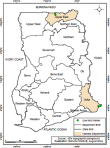
The study was conducted in 4 live bird markets in rural and peri-urban border areas of Northern and Southern Ghana. Two major live bird markets were selected from each location based on the volume of indigenous poultry trades and their distance from the respective border. In Northern Ghana, Paga LBM (2.1 km) and Navrongo LBM (13.9 km) were selected based on their proximity to Paga-Dakola border between Burkina Faso and Ghana. In Southern Ghana, Denu LBM (7.1 km) and Agbozume LBM (20 km) were selected based on their proximity to Aflao-Lomé border as shown in Figure 1.
Study design
An exploratory cross-sectional semi-quantitative study was conducted using semi-structured questionnaire, observations and interviews. The study period lasted from May to July 2024. The study included a total of 180 rural poultry traders.
Sampling criteria
To obtain information on LBMs and the trading activities of poultry traders in the border areas of Northern and Southern Ghana, a focus group discussion consisting of 7 veterinary officers was conducted to identify all the LBMs [11]. An LBM for this study was defined as an open space with 2 or more traders selling live poultry at least once per week whether this location is part of a general food market or is a location specializing in the sale of live birds.
Sample size
Given the informal structure of live bird markets and the diverse trading practices, a pragmatic sample size was used, guided by trader availability, relative size and activity level of the markets, and willingness to participate during market days. This approach was adopted because a formal sampling frame for traders in rural border live bird markets does not exist, and prior prevalence estimates required for power calculations were unavailable.
Market characteristics
Northern Ghana
Two live bird markets Paga and Navrongo were purposively selected for this study. These markets, all open-air with basic infrastructure, primarily focused on selling live birds and lacked slaughter facilities. The markets operate every three days. The markets varied in size, with Paga hosting 50-100 traders daily, while Navrongo host 100-200 traders each day. Poultry trade volume was higher in Navrongo, where 1200-1500 birds were traded daily, compared to 500-700 birds in Paga. Peak trading periods coincided with festive seasons, and market activity increased during the early rainy season (April and May) as farmers sold birds to purchase agricultural inputs [14]. Unlike Paga, which were solely live bird markets, Navrongo were integrated within larger markets. Navrongo featured a separate small ruminant section.
Southern Ghana
Two live bird markets Denu, and Agbozume were purposively selected for this study. These markets are also open-air with basic infrastructure, primarily focused on selling live birds and lacked slaughter facilities. They are operated every five days and varied in size, with Denu hosting 50-100 traders daily, while Agbozume host 100-200 traders each day. Poultry trade volume was higher Agbozume, where 1200-1500 birds were traded daily, compared to 500-700 birds in Denu. Peak trading periods also coincided with festive seasons as observed in Northern Ghana. Denu is solely a live bird market while Agbozume was integrated within a larger market. With traders selling other livestock and agricultural products.
Trading practices
A trader in this study was a person who sells or purchases birds in an LBM at least every market day of the selected LBMs. This maybe a middleman or a farmer. A middleman was defined in this study as an individual who has negotiated with a trader to sell live poultry to end-customers/other traders in an LBM, or purchased live poultry from traders and then re-selling them at the same/another location. In the instance, where poultry traders also worked as middlemen, the respondents were assigned the roles they identified most closely with.
Instrument used and data collection
A combination of quantitative and qualitative methods of data collection was employed in collecting data for the study to allow for statistically reliable information by way of triangulation. Data were collected via a semi-structured pre-tested closed-ended and open-ended questionnaire. Alongside the questionnaire administration, observational research, and informal interviews were conducted to collect additional qualitative information.
Observations were made on market characteristics and trading practices in various markets. Interviews were conducted among Market Heads and Queens to obtain their perspectives on the findings from the questionnaires. Questionnaires were administered to 100 respondents in Northern Ghana and 80 in Southern Ghana. The main focus of the questionnaire was to generate data on demographic information, sources of birds, volume of poultry trades, means of transportation of birds, and handling and biosecurity practices in the markets. Regarding the biosecurity practices, 5 major questions were asked (Table 1) and the responses were Yes and No. Out of the 5 questions two of them namely "Do you clean your cages and do you isolate sick birds", the response were graded as Yes = 1, No = 0, while for the other 3 questions, these were negative practices and their response was graded as Yes = 0 and No = 1. A total score of 5 points was considered for this study and the categorization of the biosecurity levels was done into poor (0-2 point) and good (3-5 points) as described by Laanen et al. en 2014 [15] .
Data analysis
All data obtained was entered into Microsoft excel version 2019 and analysed using SPSS version 26. Quantitative data were analysed statistically using descriptive statistics. Sankey diagrams were constructed to visualize the number of sources identified in all 4 markets (Paga, Navrongo, Agbozume, Denu). Chi-square analysis was used to assess the association between the biosecurity practices levels and the location. All the statistical analyses were performed at 5% significance level.
Ethical consideration
This study was approved by the director of the Veterinary Services Directorate of Ghana (Approval number: MOFA/VSD/24/05/02). In addition, permission was obtained by the Market Heads and Queens under study. Verbal informed consent was also obtained from all participant traders before the interviews.
Demographic characteristics
The demographic characteristics of the respondents are summarized in Table 2. In Northern Ghana, all respondents were male, whereas in Southern Ghana, traders were predominantly female. Middle-aged traders (41-60 years) were the majority in both regions, with 42.0% in Northern and 48.7% in Southern Ghana. Education levels varied, with most traders having basic education or none: 47.0% in Northern and 33.7% in Southern. Marital status was mostly married (52.0% in Northern, 68.7% in Southern), with some single or divorced. Regarding trading experience, 68.0% of Northern and 57.5% of Southern traders had over 10 years of experience. Bird rearing differed between regions, with 54% of Northern traders rearing their own birds, compared to only 22.5% in Southern Ghana. Additionally, 68.8% of traders involved "itinerant" traders in their activities.
Trading practices
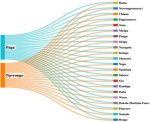
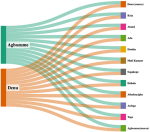
Information on trading practices (source and volume of poultry trades) are summarized in Table 3. Traders sourced birds from multiple locations, including Burkina Faso and Togo, illustrated in Figure 2 and Figure 3.
Transportation of poultry
Information on trading practices, specifically the transportation of poultry, is summarized in Table 4 and Table 5. In Northern Ghana, 89.0% of traders used motorbikes or tricycles for transportation. Most traders used baskets or wooden moveable cages, typically purchasing birds from locations within a 10 km radius of the market. In Southern Ghana, 40.0% of traders walked, using headpans or baskets (32.5%) to transport poultry. Traders in the south tended to purchase birds from locations within a 20 km radius of the market.
Cross-border trade
In both locations, Northern Ghana (53.3%) and Southern Ghana (67.3%) of respondents did not go through veterinary inspection.
Biosecurity practices
The biosecurity practices among poultry traders in both Northern and Southern Ghana were found to be generally inadequate (Table 6), with 61.3% of respondents demonstrating poor biosecurity measures and 38.3% of respondents demonstrating good biosecurity measures. Northern Ghana had a higher proportion of traders with poor biosecurity practices (37.3%) compared to Southern Ghana (24.4%) (Table 7).
This study examined the demographic, market characteristics, trading and biosecurity practices of some selected border rural live bird markets in Ghana. The findings revealed notable regional differences in gender participation in poultry trading. In Northern Ghana, the trade is male-dominated, likely due to the sociocultural barriers that prevent women from accessing resources and decision-making roles in poultry rearing and trade [4,16-18]. Additionally, male traders were more engaged in cross-border and inter-regional trades, highlighting a gendered division of labor in these activities. Conversely, in Southern Ghana, women are more prevalent in poultry trading, which aligns with the findings of Goka et al. [8].
The age distribution of traders also showed regional patterns, with a significant proportion of traders in both regions being between 41 and 60 years old, consistent with previous studies [8,17]. This evidence suggests that poultry trading is largely carried out by experienced individuals who may rely heavily on the activity for livelihood. The broader age range of traders, including those aged 21 to 60 years as in Northern Ghana suggests the presence of younger individuals who are gradually being integrated into the trade [17]. Trading practices varied by region, influencing disease risks. Northern traders, often also farmers, directly engage with markets, increasing disease transmission risks into rural flock from live bird markets and vice versa [14].
The study revealed that the high frequency of trader movements and the practice of sourcing birds from multiple locations, including Burkina Faso and Togo, contribute to a complex trading network that may facilitate the spread of infectious diseases. This observation aligns with findings from previous studies [11,19]. Most traders sourced their birds from households and markets within their regions, consistent with Hinjoy et al. [20], though cross-border trade was particularly prominent in Southern Ghana, similar to patterns observed in Mali [19]. This pattern and movement can complicate disease tracking in the country, as similar risks have been documented in other West African countries. This highlights the need for coordinated cross-border surveillance systems in the sub-region. In both regions, mixed species trade was common, predominantly involving local chickens and guinea fowl, which are widely reared by rural households. The presence of multiple poultry species increases the likelihood of infectious disease transmission and reassortment of viruses, thereby intensifying the risk of emergence of zoonotic and trans-boundary animal diseases such as Avian influenza and Newcastle Disease. Turkeys were present in Southern Ghana but absent in the north, in agreement with earlier studies [17,18].
Traders in Northern Ghana typically sold a higher volume of birds while sourcing from fewer locations compared to traders in the south. This suggests a difference in volume and network driven dissemination of diseases in the two locations, and provides evidence for regional specific surveillance systems. The modes of transportation also varied, with motorbikes and tricycles being common in both regions, while bicycles were more frequently used in the north, and walking with birds in baskets or headpans was more typical in the south. Itinerant and cross-border Southern traders often used commercial vehicles ("trotro") to reach distant markets such as Ada, Accra, Tema, and Ashaiman, consistent with previous observations [8,14].
Regional differences in transportation and trading volumes suggest the need for tailored interventions. The use of bicycles in the north and walking in the south reflects varying infrastructure, impacting disease prevention efforts. The presence of itinerant and cross-border traders using commercial vehicles for distant markets underscores the need for biosecurity measures that reduce the transmission of infectious diseases that extend beyond markets to include transportation routes and border controls. Additionally, these traders may harbour zoonotic diseases such as Avian influenza and necessitates the need for an integrated surveillance system under the One Health framework.
The study found significant regional differences in biosecurity practices and openness to cross-border trade among poultry traders in Northern and Southern Ghana, revealing patterns both consistent with and divergent from previous studies. The poor biosecurity compliance observed may be attributed to multiple factors ranging from limited access to formal education to weak institutional enforcement of biosecurity regulations in live bird markets.
Unlike Southern traders who openly discussed trading with Togo, Northern traders were less forthcoming about cross-border activities, often using motorbikes with Burkina Faso plates. This reluctance mirrors findings from Molia et al. [19] in Mali, where cross-border trade was similarly underreported, suggesting a broader regional pattern of informal and less transparent trading practices. Both regions engaged in risky behaviors such as mixed-species transportation and selling sick birds, which aligns with observations by Mensah-Bonsu and Rich [14] and Islam et al. [21] regarding the reliance on poultry trading as their primary source of income, making it difficult to adhere to such biosecurity measures. Moreover, the lack of biosecurity training observed in this study was more pronounced compared to Fasanmi et al. [9], who noted that even where training had occurred, adherence was poor, indicating a persistent challenge in improving hygiene and health practices which require enforcement of veterinary inspection, designated isolation areas, cleaning facilities, and waste disposal systems.
In contrast to previous studies by Turkson [7], where challenges in cleaning wooden baskets were noted, Southern traders in this study were more likely to use easily cleanable headpans, suggesting some regional variation in the adoption of biosecurity measures. Additionally, unlike the findings of Mensah-Bonsu and Rich [14], which highlighted the mixed sale of livestock and poultry as a common practice, this study found that Northern traders were more likely to keep livestock and poultry separate, while Southern traders frequently sold them together. These findings emphasize the need for region-specific interventions, such as promoting easily cleanable materials in the north and segregating different species during trade in the south, to address the unique challenges and risks identified in the informal poultry trade across Ghana's border areas.
Live bird markets in this study are located along high risk areas for introduction and spread of zoonotic diseases in the West African sub-region. In addition, the poor biosecurity practices in these markets exacerbates the problem. The movement of many people across multiple locations to engage in trading activities can influence disease transmission. Hence, strengthening One Health surveillance systems especially at border live bird markets, represents a critical strategy for the early detection of infectious diseases.
Limitation of the study
The scope of the study is limited to selected live bird markets and could not explicitly capture the structure of the trade network of rural poultry traders in the border areas, hence limiting the generalization of the findings to other locations (particularity areas that are not close to border areas). The study focuses on rural poultry production, thus, commercial farms and other poultry production levels were not included. A future study covering other poultry sectors could help identify different risks sectors. The study did not also include longitudinal data that could report the changes in trading practices over time.
This study has illuminated the critical role that rural poultry trading practices, particularly cross-border trade and poor biosecurity measures, may play in the dissemination of infectious diseases such as Newcastle Disease and Avian influenza in Ghana. The findings underscore the significant gender disparities in poultry trading between Northern and Southern Ghana, with men predominantly engaged in the north and women in the south, reflecting deep-rooted sociocultural influences. Moreover, the study highlights the complex trading networks that span multiple locations and often cross-national borders, thereby increasing the risk of disease transmission. The inadequate biosecurity practices, particularly the lack of training and poor handling of sick birds, further exacerbate this risk. To mitigate the risks associated with rural poultry trading practices, it is essential to implement targeted biosecurity training for traders, improve market infrastructure with proper sanitation and waste disposal systems and incorporate traders into national and regional disease reporting systems. Additionally, this is the need to strengthen veterinary inspection at border points, improve cross-border collaboration between Ghana and neighboring countries (to harmonize surveillance systems and integrate the One Health framework) and promote gender-inclusive policies to empower women in the poultry value chain.
What is known about this topic
- Local chicken and Guinea fowls are the most commonly traded local poultry in rural areas - traders trade on market days and during festive periods;
- Poultry trades especially cross-border poultry trade facilitates the risk of introduction of many infectious diseases;
- Poor biosecurity measures in live bird markets in developing countries are known to influence disease transmission in poultry - effective biosecurity implementation is important for preventing infectious diseases introduction and spread.
What this study adds
- The study highlights gender disparities in rural poultry trade between Northern and Southern Ghana;
- The study identified the source-destinations of local poultry in Northern and Southern Ghana, modes of transportation, and volume of poultry traded; understanding the movements of local poultry is crucial to the implementation of targeted intervention and policies in disease prevention and control;
- The study recommends education and training on biosecurity for traders, improving market infrastructure including sanitation and disposal facilities, collaborating with local communities to report poultry moralities especially during cross-border and informal trades, and enforcement of permits and regulations in live bird markets.
The authors declare no competing interests.
All authors contributed to this work. All authors read and agreed to the final manuscript.
We acknowledge the support of the African Union who funded this research through its institute, Pan African University Life and Earth Sciences Institute (including Health and Agriculture), University of Ibadan, Nigeria. We would like to also thank all of the study participants, the market heads and queens, and the district veterinarians, particularly the veterinary staff of Paga for their generous assistance in the survey.
Table 1: biosecurity indicators and scoring criteria used to assess poultry traders in live bird markets
Table 2: demographic characteristics of traders
Table 3: information on source and volume of trade
Table 4: species traded in the two locations
Table 5: information on transportation and cross-border trade
Table 6: biosecurity practices in the two locations
Table 7: association between biosecurity level and location
Figure 1: map of study locations showing the live bird markets
Figure 2: number of sources identified to Paga and Navrongo live bird markets
Figure 3: number of sources identified to Agbozume and Denu live bird markets - biosecurity level
- Ouma EA, Kankya C, Dione M, Kelly T, Enahoro D, Chiwanga G et al. Poultry health constraints in smallholder village poultry systems in Northern Ghana and Central Tanzania. Front Vet Sci. 2023 Jul 3;10:1159331. PubMed | Google Scholar
- Abdul-Rahman II, Adu YE. The role of the rural farmer in guinea fowl Numida meleagris value chain, a case study of the Tolon district. Livestock Research for Rural Development. 2017 Jun 20;29(4):1-3. Google Scholar
- Naggujja J, Njiru N, Msoffe P, Naazie A, Kelly T, Enahoro D et al. TANZANIA AND GHANA POULTRY SECTOR POLICY REVIEW. USAID. 2020. Google Scholar
- Enahoro D, Galiè A, Abukari Y, Chiwanga GH, Kelly TR, Kahamba J et al. Strategies to Upgrade Animal Health Delivery in Village Poultry Systems: Perspectives of Stakeholders From Northern Ghana and Central Zones in Tanzania. Front Vet Sci. 2021 Jun 7;8:611357. PubMed
- Asante IA, Bertram S, Awuni J, Commey AN, Aniwa B, Ampofo WK et al. Highly Pathogenic Avian Influenza A(H5N1) Virus among Poultry, Ghana, 2015. Emerg Infect Dis. 2016 Dec;22(12):2209-2211. PubMed | Google Scholar
- Wu T, Perrings C. The live poultry trade and the spread of highly pathogenic avian influenza: Regional differences between Europe, West Africa, and Southeast Asia. PLoS One. 2018 Dec 19;13(12):e0208197. PubMed | Google Scholar
- Turkson PK. Qualitative Release Assessment of the Risk of Re-introduction of HPAI H5N1 Virus from Neighbouring Countries into Ghana via Cross-border Trade and Movement of Birds and People. Africa/Indonesia Team Working Paper No.20. 2020. Google Scholar
- Goka PD, Folitse DR, Tasiame W, Amemor E, Burimuah V, Asare AD et al. Assessing cross-border live poultry trade as a possible factor for infectious diseases spread between Aflao and Lomé. PAMJ-One Health. 2024 Jun 19;14:7. Google Scholar
- Fasanmi OG, Ahmed SSU, Oladele-Bukola MO, El-Tahawy AS, Elbestawy AR, Fasina FO. An evaluation of biosecurity compliance levels and assessment of associated risk factors for highly pathogenic avian influenza H5N1 infection of live-bird-markets, Nigeria and Egypt. Acta Trop. 2016 Dec;164:321-328. PubMed | Google Scholar
- Sealy JE, Fournie G, Trang PH, Dang NH, Sadeyen JR, Thanh TL et al. Poultry trading behaviours in Vietnamese live bird markets as risk factors for avian influenza infection in chickens. Transbound Emerg Dis. 2019 Nov;66(6):2507-2516. PubMed | Google Scholar
- Van Kerkhove MD, Vong S, Guitian J, Holl D, Mangtani P, San S et al. Poultry movement networks in Cambodia: implications for surveillance and control of highly pathogenic avian influenza (HPAI/H5N1). Vaccine. 2009 Oct 23;27(45):6345-52. PubMed | Google Scholar
- Boakye OD, Emikpe BO, Folitse RD, Bonnah SG, Adusei K, Owusu M et al. Serological detection of Newcastle disease virus antibodies in local chickens and guinea fowls in the area of Kumasi, Ghana. Brazilian Journal of Poultry Science. 2016;18:87-92. Google Scholar
- Shaban S, Kyei F, Awuni J, Danquah A, Odoom T, Yingar DNYT et al. Dynamics of influenza A (avian influenza) virus in poultry in the Greater Accra region of Ghana amongst the production levels. J Immunoassay Immunochem. 2022 Jan 2;43(1):1952426. PubMed | Google Scholar
- Mensah-Bonsu A, Rich KM. Ghana's Poultry Sector Value Chains and the Impacts of HPAI. Africa/Indonesia Team Working Paper 26. October 2010. Google Scholar
- Laanen M, Maes D, Hendriksen C, Gelaude P, De Vliegher S, Rosseel Y et al. Pig, cattle and poultry farmers with a known interest in research have comparable perspectives on disease prevention and on-farm biosecurity. Prev Vet Med. 2014 Jul 1;115(1-2):1-9. PubMed | Google Scholar
- Dankwa D, Nelson F, Mzamo K, Oddoye E. A survey of rural poultry management in the West Mamprusi District and the Ga Rural District of Ghana. Ghana Journal of Agricultural Science. 2000 Jan 1;33(1):71-77.
- Dei HK ABODLA. Assessment of rural poultry production in northern Ghana. Ghanaian Journal of Animal Science. 2014;101-14.
- Balma YI, Richard NY. Socio-economic attributes of guinea fowl production in two districts in Northern Ghana. Afr J Agric Res. 2016 Apr 30;11(14):1209-17. Google Scholar
- Molia S, Boly IA, Duboz R, Coulibaly B, Guitian J, Grosbois V et al. Live bird markets characterization and trading network analysis in Mali: Implications for the surveillance and control of avian influenza and Newcastle disease. Acta Trop. 2016 Mar;155:77-88. PubMed | Google Scholar
- Hinjoy S, Thumrin P, Sridet J, Chaiyaso C, Suddee W, Thukngamdee Y et al. An overlooked poultry trade network of the smallholder farms in the border provinces of Thailand, 2021: implications for avian influenza surveillance. Front Vet Sci. 2024 Feb 7;11:1301513. PubMed | Google Scholar
- Islam A, Amin E, Islam S, Hossain ME, Al Mamun A, Sahabuddin M et al. Annual trading patterns and risk factors of avian influenza A/H5 and A/H9 virus circulation in turkey birds (Meleagris gallopavo) at live bird markets in Dhaka city, Bangladesh. Front Vet Sci. 2023 Jul 4;10:1148615. PubMed | Google Scholar
Search

This article authors
On Pubmed
On Google Scholar
Citation [Download]
Navigate this article
Similar articles in
Key words
Tables and figures

Article metrics
Recently from the PAMJ-OH