Eco-hotels as mosquito exposure sites: a observational study in Malang, Indonesia
Hebert Adrianto, Minarni Wartiningsih, William Sayogo, Poedji Hastutiek
Corresponding author: Hebert Adrianto, Department of Medical Parasitology, School of Medicine, Universitas Ciputra, 60219, Surabaya City, East Java Province, Indonesia 
Received: 04 Nov 2025 - Accepted: 28 Jun 2026 - Published: 10 Jul 2026
Domain: Entomology,Environmental health,Medical entomology
Keywords: Adult mosquitoes, culex, eco-hotel, environmental characteristics, Indonesia
Funding: This work was supported by the Ministry of Education, Culture, Research, and Technology of the Republic of Indonesia (Kemdikbudristek) [Grant number: 128/C3/DT.05.00/PL/2025]. The funding body had no role in this manuscript's intellectual content and writing.
©Hebert Adrianto et al. PAMJ-One Health (ISSN: 2707-2800). This is an Open Access article distributed under the terms of the Creative Commons Attribution International 4.0 License (https://creativecommons.org/licenses/by/4.0/), which permits unrestricted use, distribution, and reproduction in any medium, provided the original work is properly cited.
Cite this article: Hebert Adrianto et al. Eco-hotels as mosquito exposure sites: a observational study in Malang, Indonesia. PAMJ-One Health. 2026;20:5. [doi: 10.11604/pamj-oh.2026.20.5.50084]
Available online at: https://www.one-health.panafrican-med-journal.com/content/article/20/5/full
 PDF in process
Research 

Eco-hotels as mosquito exposure sites: a observational study in Malang, Indonesia
Eco-hotels as mosquito exposure sites: an observational study in Malang, Indonesia
 Hebert Adrianto1,&, Minarni Wartiningsih2, William Sayogo3, Poedji Hastutiek4
&Corresponding author
Introduction: the current tourism trend has encouraged the growth of eco-hotel concepts. Ecological features within eco-friendly hotels may create aquatic habitats that support mosquito breeding. Adult mosquito populations can disrupt human well-being through biting and blood-sucking, and they can also transmit pathogens. This study aims to describe the environmental characteristics of eco-hotels and the presence of adult mosquitoes.
Methods: this was a descriptive, observational, cross-sectional study. The study was conducted at three hotels in Malang City and three hotels in Malang Regency, East Java Province, Indonesia, selected by random sampling. Control sites were in residential houses in Sidoarjo City. Mosquito collection was carried out using a CDC Light Trap (Model 512, Ex. USA) from July to August 2025. The dominant vegetation surrounding the accommodation was described. Captured mosquitoes were then counted to determine their density and sex. Air temperature and humidity were measured both at night and in the morning. Data were analyzed descriptively.
Results: eco-hotels in Malang City had vegetation and water sources that could potentially serve as mosquito breeding sites. Eco-hotels in Malang Regency were dominated by tree vegetation. No adult mosquitoes were found in either the Malang City or Malang Regency eco-hotels during July to August 2025, but Culex mosquitoes were found in houses in Sidoarjo.
Conclusion: no adult mosquitoes were found in the eco-hotels at the study sites during July to August 2025. Future studies should include mosquito observations in eco-hotels during the rainy season.

The current tourism trend has stimulated the growth of eco-hotel concepts that emphasize environmentally friendly practices, resource conservation, and the integration of green spaces. However, these ecological features may inadvertently create aquatic habitats that support mosquito development. The physical conditions and environmental management of hotels have been identified as important factors that can increase the occurrence of mosquito larval habitats in commercial environments such as hotel complexes [1]. A study reported 5,958 dengue cases among travelers from non-endemic countries between 2007 and 2022, with tourism accounting for the majority of travel purposes (67.3%), followed by family visits (12.2%) and business trips (11%) [2].
Several studies have reported that tourism can serve as a potential route of disease transmission. For instance, 36 cases of dengue virus (DENV) infection were documented in German travelers returning from Egypt throughout 2023 [3]. Approximately half of the reported cases occurred among travelers with a trip duration of less than 30 days, with some cases involving only 9-10 days of visits to tourist destinations such as Bali and Thailand [4]. A case report describing a 43-year-old Australian tourist who developed Japanese Encephalitis (JE) with chorioretinitis (inflammation of the retina and choroid) after a 10-day holiday in Bali challenges the classical assumption that JE affects only long-term travelers or individuals engaging in rural activities. Even resort tourists with minimal outdoor activity remain at risk due to exposure to Culex mosquitoes, which are active year-round in tropical regions such as Bali. Moreover, Culex vectors have shown adaptability to survive in tourism environments [5]. Between 2010 and 2021, a total of 7,528 dengue cases were reported among travelers returning to the United States [6].
Previous studies have shown that the peak biting activity of female Culex mosquitoes occurs between 3:00-4:00 am and 8:00-10:00 pm [7]. The biting activity of Aedes albopictus peaks in the morning between 9:00-10:00 am and 4:00-5:00 pm [8]. Aedes aegypti is more active outdoors during the daytime, with activity peaks at: 00-8:00 am and 5:00-6:00 pm, while indoors, the highest activity occurs between 7:00-8:00 pm, followed by 8:00-9:00 am [9]. Phytotelmata are natural water-holding structures that form in plant parts and often serve as mosquito larval habitats. Common types of phytotelmata for mosquitoes include water trapped in bromeliad leaves, tree holes, leaf axils, and other plant parts that can collect rainwater [10]. Previous studies have reported that phytotelmata plants constitute significant mosquito breeding sites that should be considered in vector control programs [11]. Mosquito habitats can even develop in extremely arid regions such as Hurghada, which receives only 5.5 mm of annual rainfall, due to the presence of artificial water sources in hotels and gardens [3].
An eco-hotel is a hospitality establishment that systematically implements environmentally sustainable management and operational practices, including integrating green spaces and vegetation into its design and daily operations. Vegetation in eco-hotel landscapes, therefore, has the potential to serve as mosquito breeding sites and to sustain mosquito populations. Although evidence suggests that tourist areas may act as reservoirs for vectors, the literature specifically assessing eco-hotels as potential mosquito breeding ecosystems remains limited. This issue highlights a research gap, particularly in Indonesia, where the combination of a tropical climate, seasonal rainfall, and high tourism concentrations may amplify mosquito breeding risks if environmental management practices are not adapted for vector control [12]. Indonesia is a tropical nation that serves as a natural habitat for various mosquito vector species. This study focuses on several eco-hotels located across different areas in Malang City, East Java Province, Indonesia. This study aims to analyze the environmental characteristics of eco-hotels, including temperature, humidity, and dominant vegetation types, to identify the mosquito genera present in eco-hotels, and to assess mosquito density based on the proportion of male and female mosquitoes collected. This study hypothesizes that vegetation and water sources, typical characteristics of eco-hotels, allow mosquitoes to breed and survive in these environments.

Study type and design: this study employed a descriptive observational design with a cross-sectional approach.
Setting and participants: the study was conducted between July and August 2025. The study population consisted of eco-hotels located in dengue-endemic areas, and the sampling units were the eco-hotels themselves [13]. The number of hotels included in this study (n= 6) was determined based on high dengue fever incidence in the study area, the availability of environmentally friendly hotels that met the inclusion criteria, and the need to capture environmental variability between urban (Malang City) and suburban (Malang Regency) settings, while considering time and cost constraints. Hotels were randomly selected based on the following inclusion criteria: being located in areas with vegetation and high dengue fever incidence. Prior coordination and permissions were obtained from local hotel management and municipal authorities before field activities.
Variables and data sources: the primary variable was adult mosquito density, defined as the number of adult mosquitoes captured per trap during the sampling period (17:00-11:00), with mosquito counts further categorized by sex. Environmental variables included air temperature (°C), relative humidity (%), and dominant vegetation types surrounding the accommodation area. Mosquito sampling was performed using CDC Insect Light Traps (Model 512, John W. Hock Company, USA). The CDC insect light traps were installed at selected outdoor locations within the hotel premises at approximately 1.5 meters above ground and operated overnight from 17:00 to 11:00, following standard mosquito surveillance protocols. Captured mosquitoes were collected the following morning, counted, sexed, and identified to the genus level using standard morphological keys. Environmental parameters were measured with a Duux Hygro + Thermometer, and vegetation was identified by direct observation and cross-validated with Google Lens.
Bias control: potential measurement bias was minimized by calibrating all equipment before sampling, repeating environmental measurements twice per site, and using a control location (a residential house in Sidoarjo) to confirm trap reliability. Random site selection reduced location bias.
Study size: a total of six eco-hotels (three in Malang City and three in Malang Regency) were selected using a simple random sampling procedure. A sampling frame was constructed from an official list of eco-hotels that met the inclusion criteria, and each hotel was assigned a unique identification number. Random selection was then performed using a computer-based randomization tool [14].
Quantitative variables and statistical methods: quantitative data, such as mosquito density, were summarized as proportions and means. Environmental characteristics were presented descriptively and compared between Malang City and Malang Regency using average values. Statistical analysis was performed using Microsoft Excel 2021.
Ethical approval: this study received ethical clearance from the Health Research Ethics Committee, School of Medicine, Universitas Ciputra, Surabaya (No. 215/EC/KEPK-FKUC/VII/2025). The hotel receptionists and management also approved the installation of insect light traps.
Participants: a total of 7 trapping sites were included in the study: 6 eco-hotels (3 in Malang City and 3 in Malang Regency) and 1 residential control site in Sidoarjo. None were excluded or refused participation. In general, each eco-hotel was characterized by its vegetation type, presence or absence of aquatic habitats, and microclimatic conditions (temperature and humidity).
Outcome data: no adult mosquitoes were captured at any of the eco-hotel sites, whereas 62 Culex mosquitoes were captured at the control site.
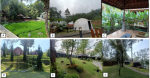
Descriptive data: the eco-hotels in Malang City had vegetation and water sources that could serve as mosquito breeding sites; however, no adult mosquitoes were detected (Figure 1). Eco-hotel A was surrounded by dominant vegetation, including rice fields, swimming pools, and small ponds. The predominant plant species included rice (Oryza sativa), pandan (Pandanus sp.), dwarf water lettuce (Pistia stratiotes), and coconut trees (Cocos nucifera). Eco-hotel A also featured stilt houses and seating areas. No mosquitoes were found at this site. The ambient temperature at the mosquito-trapping location was 23°C at night, with 66% humidity, and 25°C in the morning, with 68% humidity. The vegetation surrounding Eco-hotel B consisted mainly of grasses, palm trees, and traveler´s banana (Calathea lutea). Eco-hotel B did not have ponds or aquatic habitats, but it did have a wastewater drainage channel with no stagnant water. The ambient temperature at the trapping site was 16°C at night, with 96% humidity, and 21°C in the morning, with 88% humidity. Eco-hotel C was characterized by the dominant vegetation of wild banana plants (Strelitzia nicolai) and a swimming pool. The ambient temperature at the trapping site was 26°C at night, with 70% humidity, and 23°C in the morning, with 82% humidity.
In general, the eco-hotels in Malang Regency were characterized by dominant tree vegetation, and no adult mosquitoes were captured at any of these locations. Phytotelmata plants were not observed in any of the eco-hotels. Only one eco-hotel, coded D, had an aquatic habitat: a swimming pool. Eco-hotel D featured dominant vegetation consisting of grasses, shrubs, and tall trees. The ambient temperature at the trapping site was 23°C at night, with 64% humidity, and 24°C in the morning, with 55% humidity. Eco-hotel E lacked aquatic habitats, such as ponds. The vegetation at this site consisted of tall trees, shrubs, and ornamental plants such as (Coleus sp. (miana plant), (Ipomoea batatas, and (Cuphea hyssopifolia (Taiwan flower). The ambient temperature at the trapping site was 16°C at night, with 84% humidity, and 24°C in the morning, with 62% humidity. The environmental conditions at Eco-hotel F were characterized by lower humidity, with dominant vegetation composed of grasses and pine trees (Pinus merkusii). The ambient temperature at the mosquito trapping site was 16°C at night, with 86% humidity, and 22°C in the morning, with 60% humidity (Figure 1).
Outcome data: at the control site, located at a residential house in Sidoarjo, a considerable number of adult mosquitoes were captured. The ambient temperature at the mosquito-trapping location was 28°C, with 64% humidity. Using the insect light trap, a total of 62 adult mosquitoes belonging to the genus Culex were collected, comprising 36 males and 26 females.
Main results: the successful capture of mosquitoes at the residential control site using the same insect light trap confirmed that the trapping equipment functioned properly. Therefore, the absence of mosquitoes at the eco-hotel sites indicates that no adult mosquitoes were present in those environments (Figure 2). No further comparative or statistical analyses were performed, as the study was primarily descriptive.
Other analyses: these results suggest that eco-hotel environments in both Malang City and Malang Regency may be less conducive to adult mosquito presence compared to residential areas.
This study found no adult mosquitoes in eco-hotel environments, suggesting that proper environmental management can effectively suppress mosquito populations, aligning with the study objective of assessing mosquito presence in tourism-related settings. Dense, lush vegetation around residential areas creates a shaded, humid microenvironment. Such conditions are highly favorable for Aedes mosquitoes, providing suitable hiding, resting, and breeding sites, thereby increasing mosquito populations near human dwellings [15].
A previous study recorded 33 Aedes aegypti larvae and 23 Aedes albopictus larvae from 30 observation points, with leaf axils identified as the dominant phytotelmata [11]. The presence of vegetation in the eco-hotel landscape may similarly provide breeding and resting habitats for mosquito populations. The absence of adult mosquitoes in the eco-hotel areas observed in this study aligns with previous findings that travelers staying in apartments or private residences had a higher proportion of mosquito-borne disease cases than those staying in hotels. This difference may be attributed to better environmental management practices in hotels, such as garden irrigation systems, drainage maintenance, and insect control, compared to those in residential or urban areas [3]. The growth of tourism accelerates the globalization of vector-borne diseases, as traveler mobility and international trade contribute to the transcontinental introduction of new viral strains [15-17]. Many travel studies show that arboviruses (dengue, chikungunya, Zika) are common among international travelers, especially short-term travelers (≤30 days) who return with mild to moderate illness [17]. Mosquitoes are detrimental to humans not only because of their blood-feeding behavior, which causes discomfort, but also because they serve as vectors of dangerous pathogens [18]. Aedes mosquitoes can transmit dengue, chikungunya, and Zika viruses [19-22]. Recent data indicate a significant rise in dengue and chikungunya cases in East and North Africa, suggesting an ecological expansion of Aedes mosquitoes into tourism zones [16]. Dengue, chikungunya, and Zika are vector-borne diseases frequently reported among travelers [23]. Culex mosquitoes, on the other hand, are known vectors of Japanese encephalitis virus (JEV) [24].
The occurrence and abundance of Aedes mosquitoes are significantly associated with the presence of breeding containers such as plastic receptacles, coconut shells, discarded tires, and metal containers-often found in shaded areas, gardens, or plant nurseries [25]. Meanwhile, stagnant water, drainage ditches, bore wells, ponds, temporary ground pools, riverbanks, and irrigation canals serve as primary oviposition and larval habitats for Culex mosquitoes [26]. Dense vegetation has been identified as a key determinant in mosquito-borne disease transmission, providing ideal resting places for adult mosquitoes [27]. Beyond pathogen transmission, another major concern is insecticide and larvicide resistance among mosquito populations. A study conducted in four selected hotel complexes on Zanzibar Island revealed that Aedes aegypti exhibited high resistance to DDT, with mortality rates ranging from 26.3% to 55.3%, and moderate resistance to deltamethrin, with mortality rates ranging from 79% to 100% [28].
The placement of insect light traps was adjusted based on adult mosquito biting activity. Aedes aegypti is primarily active indoors, particularly during peak morning hours (05:00-11:00) and late afternoon (13:00-19:00), whereas Aedes albopictus is more active outdoors, especially in the morning. Aedes aegypti exhibits endophilic behavior (resting indoors) in cool, dark, and humid areas, such as under beds or behind curtains. At the same time, Aedes albopictus displays an exophilic resting pattern (resting outdoors), typically in vegetation, shrubs, and shaded areas [29]. The mosquito fauna of Culex in Salamwates Village, Dongko District, Trenggalek Regency, Indonesia, was successfully captured between 18:00 and 24:00, with peak biting activity of Cx. tritaeniorhynchus observed between 18:45-19:00 and 23:45-24:00 [30]. The detection of Culex mosquitoes in the control group at the residential house aligns with a previous study in Nigerian households, where most collected mosquitoes were Culex quinquefasciatus (67.4%). In comparison, the primary malaria vector, Anopheles gambiae, accounted for only 2.3% of the total population examined [31]. A global epidemiological surveillance report by the GeoSentinel Surveillance Network documented 5,958 dengue cases among travelers from non-endemic countries (Europe, the Americas, and Japan) over 15 years. Most of these cases (67.3%) were associated with leisure travel, and most patients were short-term travelers (≤30 days). The most common source countries for dengue infection were Thailand (22%), Indonesia (11.4%), and India (9.1%) [2]. A previous case report described a 45-year-old Australian tourist who developed Japanese Encephalitis (JE) with chorioretinitis (inflammation of the retina and choroid) following a 10-day holiday in Bali. The patient stayed in resorts in Seminyak and Canggu, did not engage in outdoor or extreme activities, but experienced numerous mosquito bites during the rainy season [5].
Temperature plays a significant role in egg viability and hatching time, with optimal hatching temperature varying among mosquito species. Temperature also influences mosquito density, host contact frequency (biting rate), and overall mosquito survival [31]. In Singapore, temperature was found to affect Culex population dynamics. At the same time, weekly rainfall showed a significant negative correlation with the number of Culex larval habitats in residential areas, likely because heavy rainfall flushes out small breeding pools or because post-rain inspections eliminate these habitats [32]. The minimum temperature suitable for dengue virus (DENV) transmission is 14.8°C, while the optimal maximum temperature ranges between 32-33°C. Higher temperatures (around 30°C) shorten the extrinsic incubation period of DENV within mosquitoes, thus facilitating dengue transmission [33]. The optimal survival range for adult mosquitoes is between 15-35°C with a relative humidity of 70-80%. Both temperature and relative humidity are significant predictors for the spread of dengue vectors and virus transmission [34]. Ae. aegypti struggles to survive below 11°C or above 36°C [35], whereas Ae. albopictus is more adaptable to diurnal and seasonal temperature fluctuations, with its population likely to increase in northern regions as global temperatures rise [33]. The duration of mosquito development from egg to adult mosquito is inversely proportional to temperature; in other words, higher temperatures accelerate the life cycle. No embryonic development or larval survival occurs at 39°C (with water temperatures between 37.8°C and 38.5°C). Extreme temperatures above 36°C significantly reduce egg production [36]. Studies have reported that relative humidity (RH), rainfall, and temperature do not influence the minimum infection rate (MIR) of DENV. In contrast, RH and temperature are meteorological factors that affect ZIKV MIR. By comparison, rainfall significantly affects the MIR of CHIKV in Ae. albopictus [37].
The abundance of Aedes aegypti gradually increased across all regions from July to October, peaking in August in China [38]. A study conducted in Kashan County, Iran, from May to December 2019 revealed temporal variation in mosquito population peaks, with the highest density observed in September and the lowest in December. Spearman´s correlation analysis showed that the total mosquito count had a weak negative correlation with relative humidity and rainfall, a weak relationship with wind speed, and a strong positive correlation with air temperature [39]. Similarly, a study conducted in two locations in Tshwane, South Africa, Pretoria North and Willemspan from January 2022 to January 2023, found that mean temperature was the most significant and strongest predictor of mosquito abundance across most species. The relationship followed an inverted bell-shaped curve, indicating that mosquito abundance increased with rising temperature until reaching an optimal threshold, after which it declined as temperatures became too high. Regression models demonstrated a significant correlation between average temperature and the abundance of Culex spp. and Anopheles arabiensis. However, rainfall and relative humidity did not significantly affect mosquito abundance [40]. The absence of mosquitoes during the trapping period in July to August in this study could be influenced by several other factors, such as the scarcity or absence of water-holding containers from discarded items, the presence of larvivorous fish that prey on mosquito larvae, and the lack of phytotelmata plants capable of retaining water as oviposition sites. Mosquitoes are ectothermic, or poikilothermic, organisms, meaning their body temperature depends on ambient environmental conditions, making them highly sensitive to temperature fluctuations. They can only survive and reproduce within environments that match their ecological requirements, which vary among mosquito species. Temperature directly affects key parameters of vectorial capacity, which represents the efficiency of pathogen transmission by vector populations [41].
Limitations: this study has several limitations. Mosquito sampling was conducted only during the dry season (July-August), which may not reflect seasonal variation in mosquito density, species composition, and behavior, particularly during the rainy season when breeding sites and transmission risk are known to increase. In addition, sampling was not performed during peak tourism periods outside July and August, such as national holidays or high-occupancy seasons, when increased human activity, water usage, and outdoor exposure may influence mosquito-human contact rates. The short sampling duration and limited number of trap locations may also have reduced the probability of detecting low-density mosquito populations. Although the absence of mosquitoes suggests effective environmental management, these findings should be interpreted cautiously. Future studies should incorporate longitudinal sampling across different seasons, including the rainy season, and during peak tourism periods to better capture temporal variability and strengthen the generalizability of mosquito exposure assessments in eco-hotel environments.
No adult mosquitoes were found in the eco-hotels at the study sites during July to August 2025. While the absence of mosquitoes indicates effective control measures, it should be interpreted cautiously, given the limited sampling period and potential environmental variability. The eco-hotel management maintained environmental cleanliness and carefully selected the plant species cultivated on the premises.
What is known about this topic
- The physical conditions and environmental management of hotels have been identified as important factors that can contribute to the occurrence of mosquito larval habitats in commercial environments such as hotel complexes;
- The ecological features of eco-hotels may create aquatic habitats that support mosquito breeding, blood-feeding, and pathogen transmission. Several studies have reported that tourism can serve as a potential route of disease transmission;
- Data on the presence of adult mosquitoes around the eco-hotel are still limited.
What this study adds
- This study aims to describe the environmental characteristics of eco-hotels and the presence of adult mosquitoes captured using a CDC Light Trap;
- This study provides data on vegetation characteristics, nighttime and morning temperatures associated with high mosquito populations, and the time periods when mosquitoes bite and feed on blood.
The authors declare no competing interests.
Hebert Adrianto and Poedji Hastutiek: study design, methodology, data collection, visualization, writing, and editing. Minarni Wartiningsih and William Sayogo: conceptualization, supervision, data curation, visualization, initial draft, writing, and editing. All authors have reviewed and approved the final manuscript and agreed to be accountable for all aspects of the work.
This study was funded by the Ministry of Education, Culture, Research, and Technology of the Republic of Indonesia (Kemdikbudristek). The authors would like to thank Muhammad Arkan and Carol Jhosef Wojtyla for assistance during field mosquito sampling.
Figure 1: A-F) eco-hotel codes
Figure 2: A,B) mosquito collection at the residential control site
- Ayubo Kampango, Furu P, Sarath DL, Haji KA, Konradsen F, Schiøler KL et al. Risk factors for occurrence and abundance of Aedes aegypti and Aedes bromeliae at hotel compounds in Zanzibar. Parasites and Vectors. 2021;14(1):1-12. PubMed | Google Scholar
- Duvignaud A, Stoney RJ, Angelo KM, Chen LH, Cattaneo P, Motta Let al. Epidemiology of travel-associated dengue from 2007 to 2022: A GeoSentinel analysis. J Travel Med. 2024 Oct 19;31(7):taae089. PubMed | Google Scholar
- Christina Frank, Lachmann R, Wilking H, Klaus Stark. Increase in dengue fever in travellers returning from Egypt, Germany 2023. Euro Surveill. 2024 Feb;29(5):2400042. PubMed | Google Scholar
- Connor B, Bunn WB. The changing epidemiology of Japanese encephalitis and New data: The implications for New recommendations for Japanese encephalitis vaccine. Trop Dis Travel Med Vaccines. 2017 Aug 1;3:14. PubMed | Google Scholar
- Van K, Korman TM, Nicholson S, Troutbeck R, Lister DM, Woolley I. Case report: Japanese encephalitis associated with chorioretinitis after short-term travel to Bali, Indonesia. Am J Trop Med Hyg. 2020;103(4):1691-3. PubMed | Google Scholar
- Wong JM, Rivera A, Volkman HR, Torres-Velasquez B, Rodriguez DM, Paz-Bailey G et al. Travel-Associated Dengue Cases - United States, 2010-2021. MMWR Morb Mortal Wkly Rep. 2023 Jul 28;72(30):821-826. PubMed | Google Scholar
- Manju Sakhuniya, Asha Ram Meena. The biting patterns of Culex mosquitoes in the Udaipur district of southern Rajasthan. Int J Mosq Res. 2024;11(1):194-6. Google Scholar
- Novianto D, Hadi UK, Soviana S, Darusman HS. Comparison of diurnal biting activity, life table, and demographic attributes of Aedes albopictus (Asian tiger mosquito) from different urbanized settings in West Java, Indonesia. Acta Trop. 2023 May;241:106771. PubMed | Google Scholar
- Jemberie W, Dugassa S, Animut A. Biting hour and host seeking behavior of Aedes species in Urban Settings, Metema District, Northwest Ethiopia. Trop Med Infect Dis. 2025 Jan 28;10(2):38. PubMed | Google Scholar
- Ceretti-Junior W, Medeiros-Sousa AR, de Paula MB, Evangelista E, Barrio-Nuevo KM, Wilk-da-Silva R et al. Species composition and ecological aspects of immature mosquitoes (diptera: culicidae) in phytotelmata in Cantareira State Park, São Paulo, Brazil. Insects. 2025 Apr 2;16(4):376. PubMed | Google Scholar
- Shifa F, Anik EN. Phytotelmata accounts for Aedes breeding places in Mantup Sub-district, Lamongan District, Indonesia. Phytotelmata accounts for Aedes breeding places in Mantup Sub-district, Lamongan District, Indonesia. 2023;24(9):4820-8. Google Scholar
- Lippi CA, Stewart-Ibarra AM, Endy TP, Abbott M, Cueva C, Heras Fet al. Exploring the utility of social-ecological and entomological risk factors for dengue infection as surveillance indicators in the dengue hyper-endemic city of Machala, Ecuador. PLoS Negl Trop Dis. 2021;15(3):1-19. PubMed | Google Scholar
- Ali K, Addin Rizaldi M, Bangun Sugiharto S, Yuniarno S, Fitria Widiyanto A, Suratman S et al. The correlation between temperature and dengue haemorrhagic fever in Malang Regency–Indonesia: A spatial–temporal analysis. InBIO Web of Conferences. 2025;155:10005. Google Scholar
- Stacey D, Lewis KB, Smith M, Carley M, Volk R, Douglas EE et al. Decision aids for people facing health treatment or screening decisions. Cochrane Database Syst Rev. 2024;2024(1): 1-520. PubMed | Google Scholar
- Satoto TB, Diptyanusa A, Setiawan YD, Alvira N. Environmental factors of the home affect the density of Aedes aegypti (Diptera: Culicidae). Jurnal Kedokteran Yarsi. 2017 Jul 4;25(1):041-51. Google Scholar
- Okada K, Morita R, Egawa K, Hirai Y, Kaida A, Shirano M et al. Dengue virus type 1 infection in traveler returning from Tanzania to Japan, 2019. Emerg Infect Dis. 2019;25(9):1782-4. PubMed | Google Scholar
- de Bellegarde de Saint Lary C, de Hoog MLA, Jonker L, Reimerink J, van Schaijk RAH, Visser LG et al. ZIeKA monitor study: travel-related arbovirus infections among Dutch travellers, 2018-2020. Travel Med Infect Dis. 2025;68(July 2024):5-12. PubMed | Google Scholar
- Yang Wu, Wu J, Wu Q, Cai H, Hu J, Lin Z et al. The making of a dangerous vector: factors shaping the vector competence of Aedes mosquitoes. Front Cell Infect Microbiol. 2025 Nov 4:15:1718737. PubMed | Google Scholar
- Ebtisam Elghblawi. The nocturnal kissing of an annoying mosquito; Unusual insect bite reaction, a case report and a literature review. 2009 Jul;27. Google Scholar
- Kharisma VD, Probojati RT, Murtadlo AA, Ansori AN, Antonius Y, Tamam MB. Revealing potency of bioactive compounds as inhibitor of dengue virus (DENV) NS2b/NS3 protease from sweet potato (Ipomoea batatas L.) leaves. Indian J Forensic Med Toxicol. 2021;15(1):1627-32. Google Scholar
- Sazali M, Soesilohadi RH, Wijayanti N, Wibawa T, Ansori AN. In Silico Analysis of C-Type Lectins as Co-Infection Receptors of Dengue and Chikungunya Viruses in Aedes aegypti. Makara Journal of Science. 2024 Jan 28;28(1):63-71. Google Scholar
- Zainul R, Ansori AN, Murtadlo AA, Sucipto TH, Kharisma VD, Widyananda MH et al. The recent development of dengue vaccine: A review. J Med Pharm Chem Res. 2024;6(4):362-82. PubMed | Google Scholar
- Jhoana P Romero-Leiton, Acharya KR, Parmley JE, Arino J, Bouchra Nasri. Modelling the transmission of dengue, zika and chikungunya: a scoping review protocol. BMJ Open. 2023 Sep 19;13(9):e074385. PubMed | Google Scholar
- Osman S, Preet R. Dengue, chikungunya and Zika in GeoSentinel surveillance of international travellers: A literature review from 1995 to 2020. J Travel Med. 2020;27(8):1-15. PubMed | Google Scholar
- Kampango A, Hocke EF, Hansson H, Furu P, Haji KA, David JP et al. High DDT resistance without apparent association to kdr and Glutathione-S-transferase (GST) gene mutations in Aedes aegypti population at hotel compounds in Zanzibar. PLoS Negl Trop Dis. 2022 May 16;16(5):e0010355 PubMed | Google Scholar
- Grace Yap, Mailepessov D, Lim XF, Chan S, How CB, Humaidi M et al. Detection of Japanese encephalitis virus in Culex mosquitoes in Singapore. Am J Trop Med Hyg. 2020;103(3):1234-40. PubMed | Google Scholar
- Xiaobo Liu, Baimaciwang, Yue Y, Wu H, Pengcuociren, Guo Y et al. Breeding site characteristics and associated factors of Culex pipiens complex in Lhasa, Tibet, P. R. China. Int J Environ Res Public Health. 2019 Apr 18;16(8):1407. PubMed | Google Scholar
- Rekha T, Surendran J, SR S, Narasimhan A, R Shankar N, Vilas KA et al. Determinants of urban mosquito population density and community responses: A cross-sectional study. F1000Research. 2025;14:661. PubMed | Google Scholar
- Dalpadado R, Amarasinghe D, Gunathilaka N, Ariyarathna N. Bionomic aspects of dengue vectors Aedes aegypti and Aedes albopictus at domestic settings in urban, suburban and rural areas in Gampaha District, Western Province of Sri Lanka. Parasites and Vectors. 2022;15(1):1-14. PubMed | Google Scholar
- Mardliyana Shalihah M, Budi Utomo B, Subagyo Yotopranoto S, Heny Arwati H. Fauna of Culex Mosquitoes In Salamwates Village Dongko Subdistrict, Trenggalek City. Biomolecular and Health Science Journal. 2020;3(1):41-4. Google Scholar
- Amawulu Ebenezer, Shephard Woyinzuosindor. Effect of housing patterns on the indoor resting density of mosquitoes vector in the rural communities of Sagbama local government area, Bayelsa state, Nigeria. J Entomol Zool Stud. 2019;7(1):1507-10. Google Scholar
- Stacy Soh, Joel Ai. The abundance of Culex mosquito vectors for West Nile Virus and other flaviviruses: A time-series analysis of rainfall and temperature dependence in Singapore. Sci Total Environ. 2021 Feb 1:754:142420. PubMed | Google Scholar
- Liu Z, Zhang Q, Li L, He J, Guo J, Wang Z et al The effect of temperature on dengue virus transmission by Aedes mosquitoes. Front Cell Infect Microbiol. 2023 Sep 21:13:1242173. PubMed | Google Scholar
- Prasad P, Gupta SK, Mahto KK, Kumar G, Rani A, Velan I et al. Influence of climatic factors on the life stages of Aedes mosquitoes and vectorial transmission: A review. J Vector Borne Dis. 2024;61(2):158-66. PubMed | Google Scholar
- Iwamura T, Guzman-Holst A, Murray KA. Accelerating invasion potential of disease vector Aedes aegypti under climate change. Nat Commun. 2020 May 1;11(1):2130. PubMed | Google Scholar
- Marinho RA, Souza AA, Dantas ACMTV, Fernandes LDMM, Fraga PVR, Magalhães Júnior HM et al. Effects of temperature on the life cycle, expansion, and dispersion of Aedes aegypti in three cities in Paraiba, Brazil. J Vector Ecol. 2016 Jun;41(1):1-10. PubMed | Google Scholar
- Frances Edillo, Ymbong RR, Navarro AO, Cabahug MM, Kristilynn Saavedra. Detecting the impacts of humidity, rainfall, temperature, and season on chikungunya, dengue and Zika viruses in Aedes albopictus mosquitoes from selected sites in Cebu city, Philippines. Virol J. 2024;21(1):1-15. PubMed | Google Scholar
- Boyang Liu, Gao X, Ma J, Jiao Z, Xiao J, Abid M et al. Science of the Total Environment Modeling the present and future distribution of arbovirus vectors Aedes aegypti and Aedes albopictus under climate change scenarios in Mainland China. Sci Total Environ. 2019;664:203-14. PubMed | Google Scholar
- Tahereh Sadat Asgarian, Moosa-Kazemi SH, Mohammad Mehdi Sedaghat. Impact of meteorological parameters on mosquito population abundance and distribution in a former malaria endemic area, central Iran. Heliyon [Internet]. 2021;7(12):e08477. PubMed | Google Scholar
- Theresa Taona Mazarire, Lobb L, Newete SW, Givemore Munhenga. The impact of climatic factors on temporal mosquito distribution and population dynamics in an area targeted for sterile insect technique pilot trials. Int J Environ Res Public Health. 2024 Apr 28;21(5):558. PubMed | Google Scholar
- Rachel Bellone, Anna-Bella Failloux. The role of temperature in shaping mosquito-borne viruses transmission. Front Microbiol. 2020 Sep 25:11:584846. PubMed | Google Scholar
Search

This article authors
On Pubmed
On Google Scholar
Citation [Download]
Navigate this article
Similar articles in
Key words
Tables and figures

Article metrics
Recently from the PAMJ-OH