Dual outbreak of meningitis and measles among Sudanese refugees: an urgent public health challenge
Reem Essam Siddig
Corresponding author: Reem Essam Siddig, Faculty of Dentistry, University of Medical Sciences and Technology (UMST), Khartoum, Sudan 
Received: 29 Apr 2026 - Accepted: 13 May 2026 - Published: 14 May 2026
Domain: Public health emergencies
Keywords: Meningitis, Chad, measles, refugees, outbreak
Funding: This work received no specific grant from any funding agency in the public, commercial, or not-for-profit sectors.
©Reem Essam Siddig et al. PAMJ-One Health (ISSN: 2707-2800). This is an Open Access article distributed under the terms of the Creative Commons Attribution International 4.0 License (https://creativecommons.org/licenses/by/4.0/), which permits unrestricted use, distribution, and reproduction in any medium, provided the original work is properly cited.
Cite this article: Reem Essam Siddig et al. Dual outbreak of meningitis and measles among Sudanese refugees: an urgent public health challenge. PAMJ-One Health. 2026;20:1. [doi: 10.11604/pamj-oh.2026.20.1.53071]
Available online at: https://www.one-health.panafrican-med-journal.com/content/article/20/1/full
Letter to the editors 
Dual outbreak of meningitis and measles among Sudanese refugees: an urgent public health challenge
Dual outbreak of meningitis and measles among Sudanese refugees: an urgent public health challenge
 Reem Essam Siddig1,2,&
&Corresponding author

Disease outbreaks frequently coincide with large-scale population displacement. These scenarios foster optimal conditions for pathogens to spread rapidly, driven by overcrowding, insufficient sanitation, and strained health services. Since the civil war began in Sudan in April 2023, more than 700,000 new refugees have crossed into eastern Chad, raising the total number of Sudanese refugees to over 1.3 million [1]. An increasing number of meningitis cases among Sudanese refugees, with a fatality rate reaching 12%, were reported; Doctors Without Borders (MSF) has issued a critical warning about a rise in meningitis cases in a region hosting hundreds of thousands of Sudanese refugees. The overcrowded camp conditions promote the spread of pathogens through airborne and droplet transmission [2]. Twenty five (25) children have sadly succumbed to bacterial meningococcal meningitis between March and April. In Adré, Chad a border town near Sudan, out of the 212 who were admitted to MSF facilities. In the same city, measles cases are significantly rising, with numbers climbing from 16 in January to 371 in March, and already 161 cases have been reported in the first two weeks of April [2].
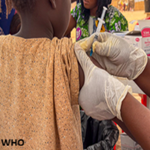
Currently, over 16,600 individuals have been vaccinated against meningitis, and more than 9,400 have received the measles vaccine. Yet there is still a need to enhance routine vaccination at the primary healthcare level, which is crucial, particularly by utilizing mobile teams from health centres to reach nearby areas. Relying solely on reactive campaigns will not be adequate without these sustainable strategies. Another issue confronting the refugees in the camps is the restricted access to water, healthcare, and proper nutrition. This situation contributes to the quick spread of illnesses and heightens the risk of serious complications, particularly for children under five [3]. This simultaneous outbreak of measles and meningitis C in the eastern region of Chad highlights the urgent need for a prompt response. Unfortunately, the humanitarian response is underfunded and facing delays due to insufficient political will, both globally and within Sudan. All parties must fulfil their obligations under international humanitarian law. To provide life-saving assistance to 1.4 million people, including 1.2 million children, UNICEF is requesting $111.2 million. It will be directed towards addressing the needs stemming from the Sudanese refugee crisis. Timely support is vital to prevent further deterioration and to ensure that humanitarian efforts are both impactful and equitable [4].
The author has read and approved the final version of this manuscript.

The author declares no competing interests.
- ReliefWeb/United Nations Population Fund (UNFP). UNFPA Situation Report: Chad Humanitarian Response (1-31 March 2026). Accessed on April 28, 2026.
- MSF. One in 10 children with meningitis at risk of death in Adré, Chad. Accessed on April 28, 2026.
- Reuters. Deadly meningitis spreads as Sudanese refugees pack Chad camps, MSF says. Accessed on April 29, 2026.
- UNICEF. Humanitarian Action for Children. Chad 2026 . Accessed on April 29, 2026.
Search
This article authors
On Pubmed
On Google Scholar
Citation [Download]
Navigate this article
Similar articles in
Key words
Article metrics
Recently from the PAMJ-OH